

eWay-CRM 10.1: Better Project Collaboration, Smarter Filters, and More


Following the launch of the new generation of eWay-CRM, we continue to improve the features you use every day. See what’s new in eWay-CRM 10.1.
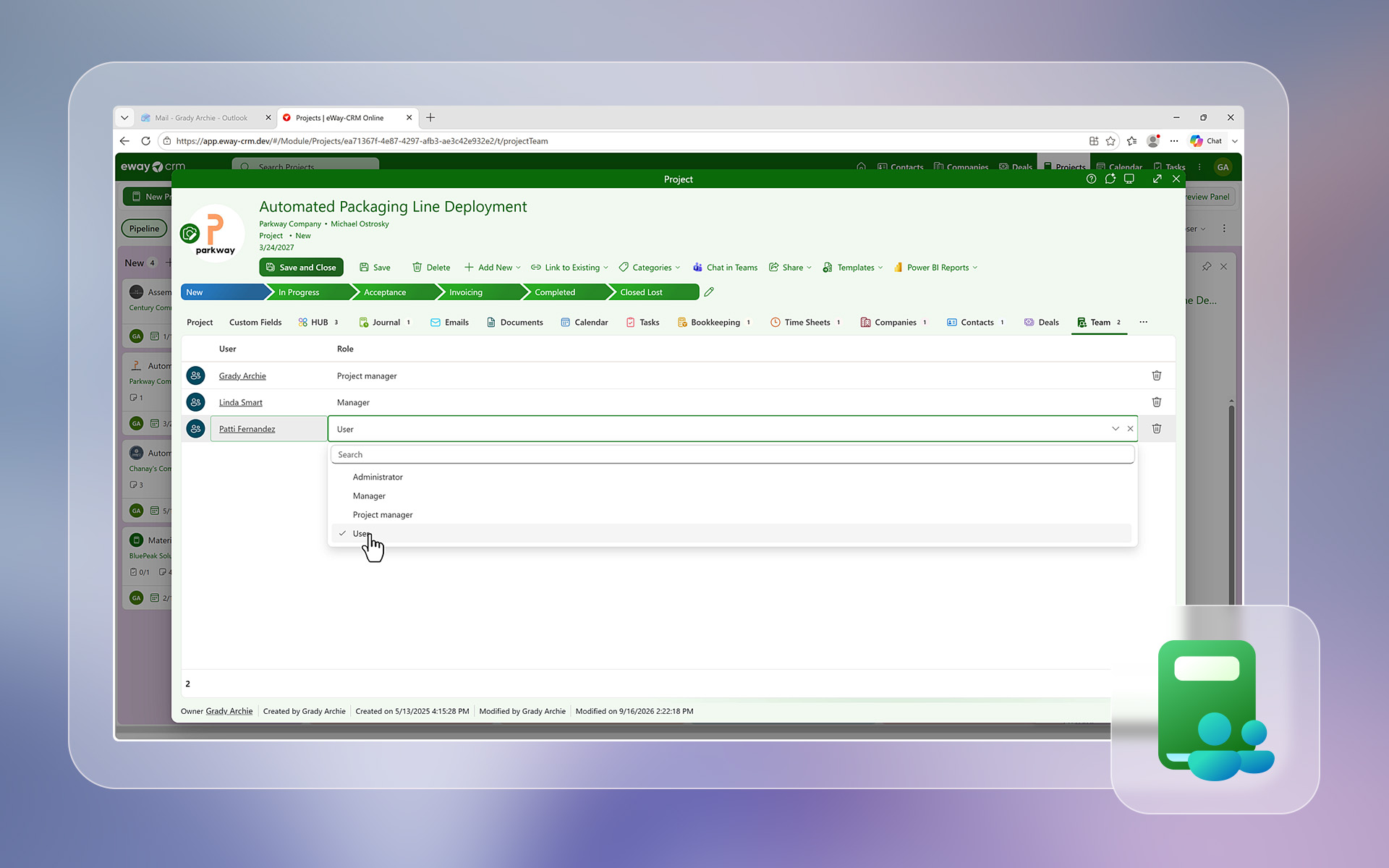
Project Teams in eWay-CRM Online
Projects usually involve several people. Everyone needs to know who is involved and who is responsible for each step.
You can now manage project teams directly in eWay-CRM Online. This makes it easy to keep track of the colleagues involved and ensure that the entire team has access to the information they need.
Working with project teams is now easier, wherever you use eWay-CRM Online.
Quick Actions in the HUB
The HUB gives you a complete history of all communication and activities related to a customer, opportunity, or project. In version 10.1, you can now reply to and forward emails, open Teams chats, complete tasks, and more, all directly from the HUB.
The new quick actions help you take the next step without having to search for the right option or switch between different parts of the system.
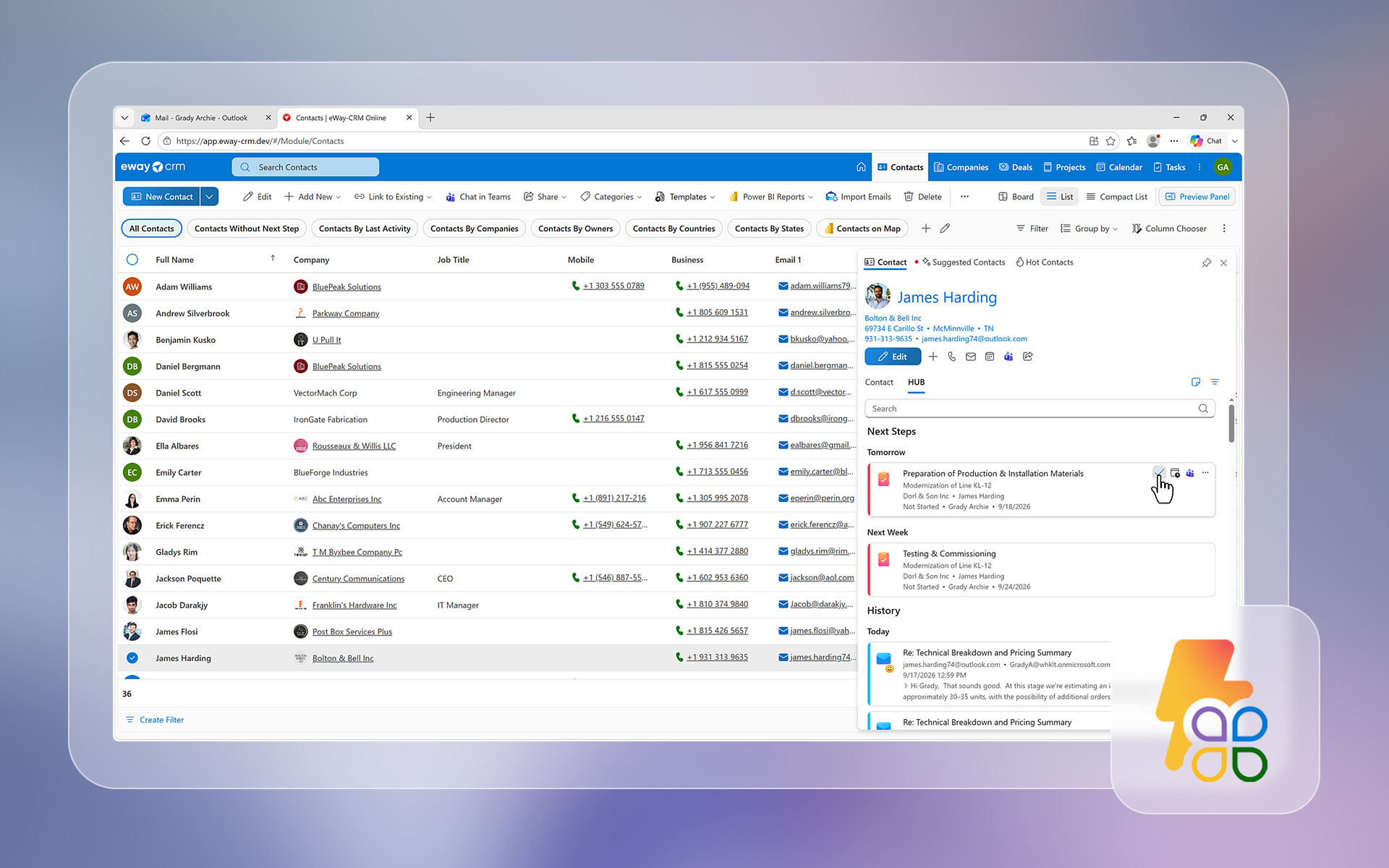
Image Previews in the HUB
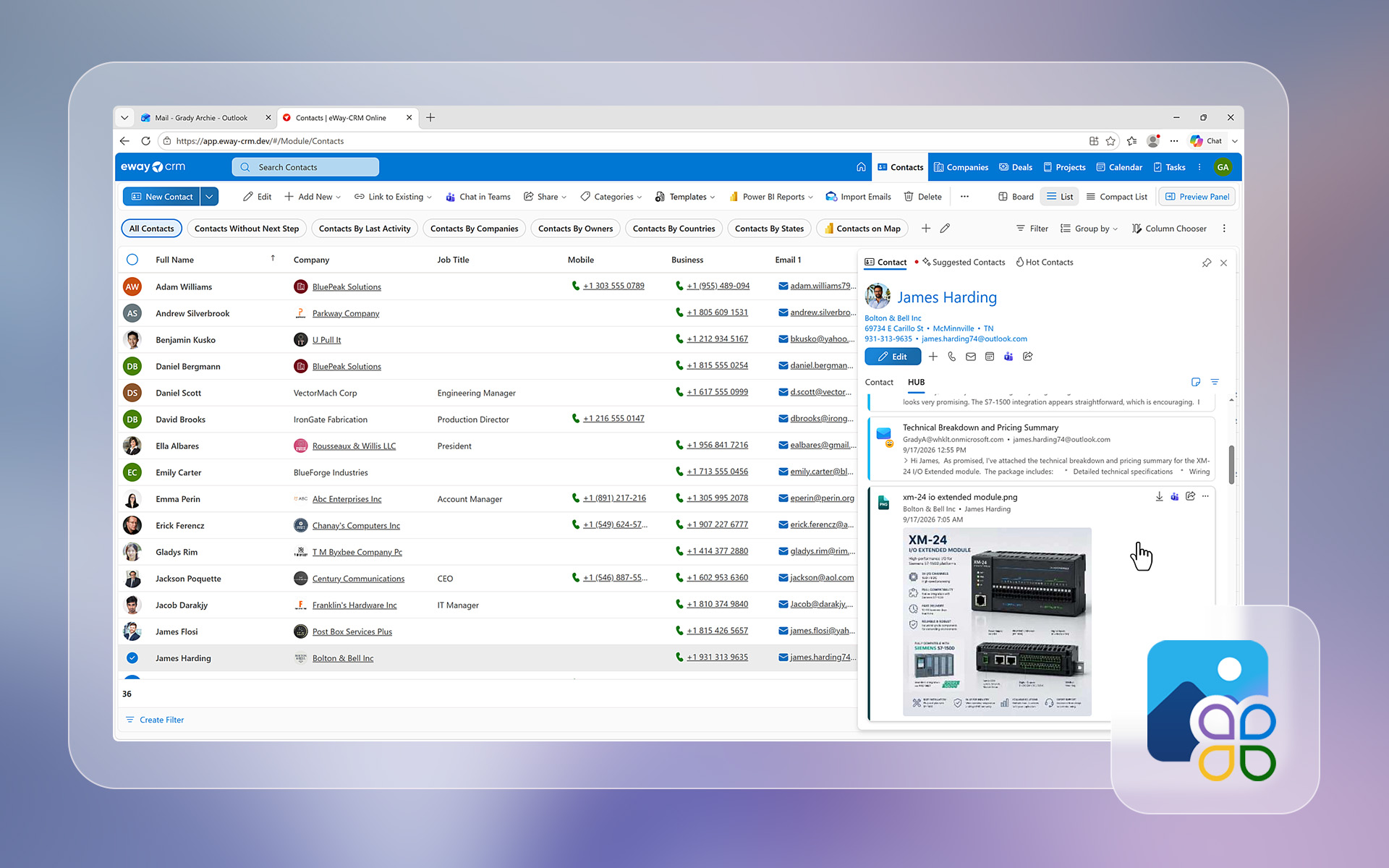
Need to check an image stored with a project or customer?
You can now preview it directly in the HUB. There is no need to download the file first or open it in another application. This helps you find the right file more quickly and stay organized, even when working with a large number of documents.
Filters by User, Manager, and Team
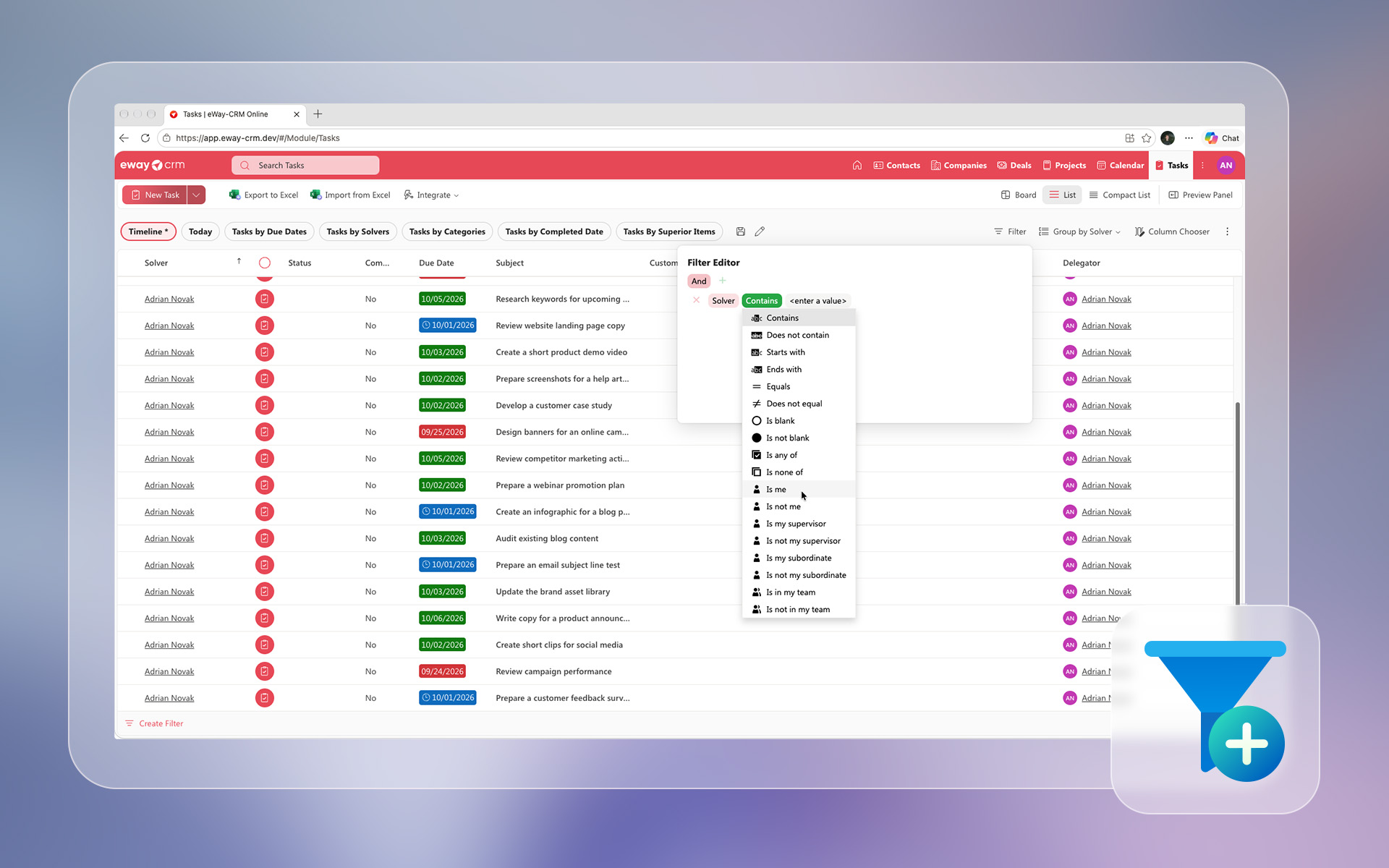
Every user needs a slightly different view of CRM data. A sales representative wants to see their deals, a manager needs an overview of the team’s work, and a project manager keeps track of their colleagues’ tasks.
That is why eWay-CRM 10.1 introduces new filter operators:
- Is me and Is not me
- Is my supervisor and Is not my manager
- Is my subordinate and Is not my subordinate
- Is in my team and Is not in my team
These conditions make it easier to create views, filters, and automations that adapt to the current user and their position within the team. There is no need to create separate settings for each colleague.
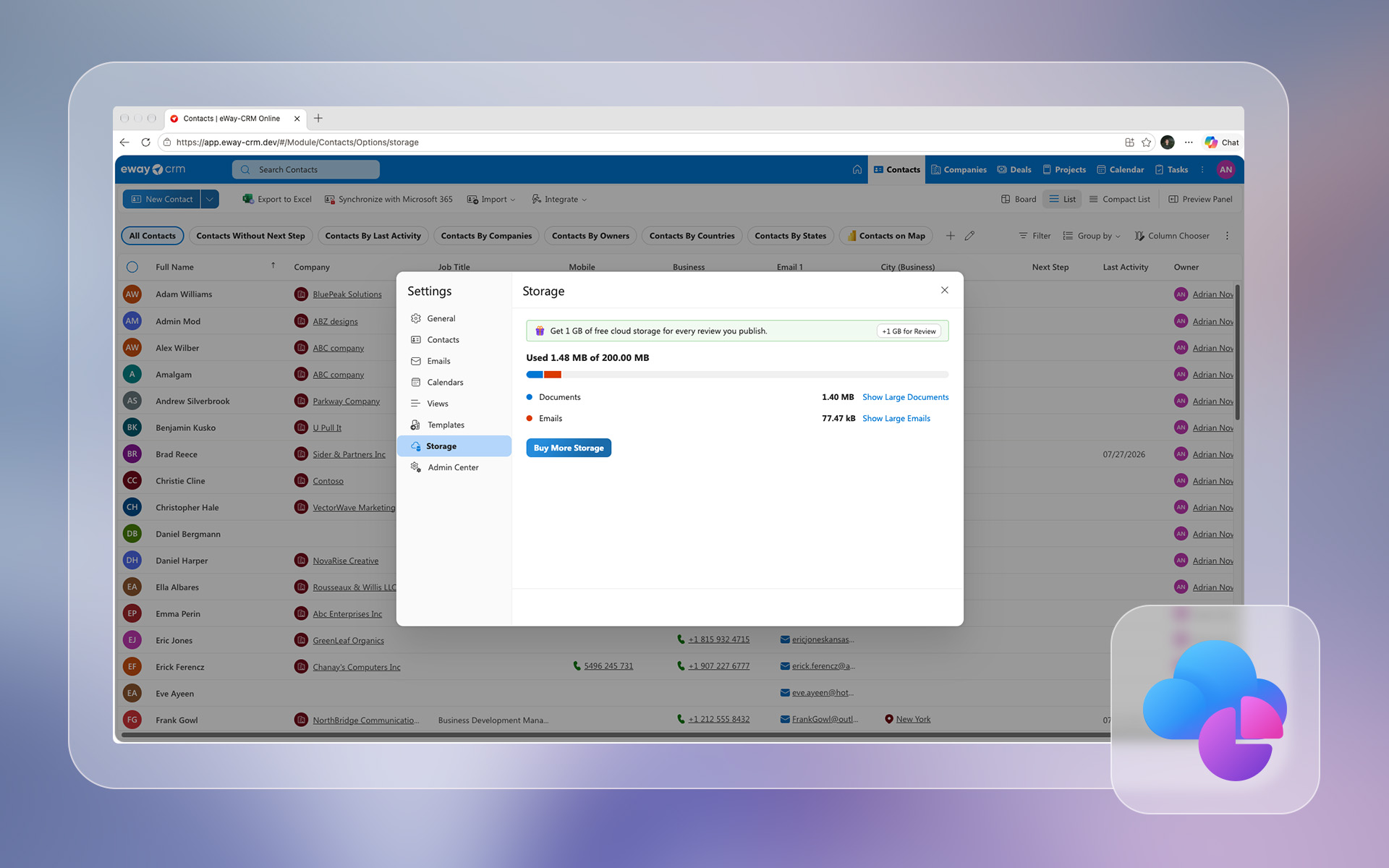
A Better Overview of Cloud Storage
How much space does your data use, and what has the greatest impact on your storage consumption?
The new cloud storage usage overview helps you better understand which data takes up the most space. This gives you greater control over your storage and the information you need to manage it more efficiently.
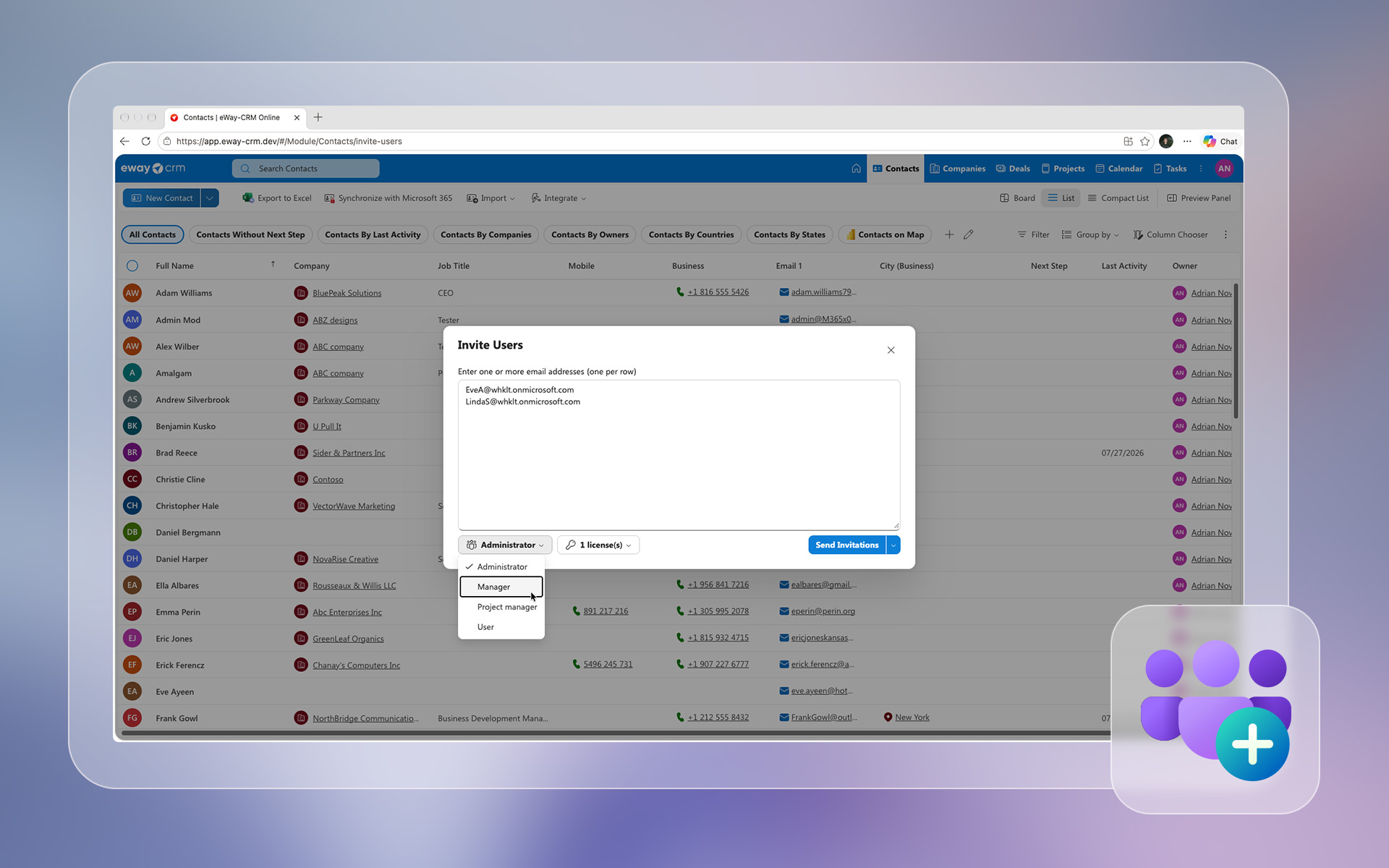
Easier User Invitations
As your team grows, adding a new colleague should not involve a lengthy setup process.
That is why we have simplified the process of inviting new users in version 10.1. Adding more people to eWay-CRM now takes fewer steps, so new colleagues can start working sooner.
A Better Experience on Mobile Devices
You do not only need your CRM when sitting at your desk. Information about a customer, project, or upcoming task is often useful before a meeting or while traveling.
That is why we have made dozens of improvements for mobile devices in eWay-CRM Online. The interface now adapts better to smaller screens, making the system feel more like a native mobile app.
This gives you convenient access to important information even when you do not have your computer with you.
Already using eWay-CRM? Update to the latest version and explore all the new features.
Not using eWay-CRM yet? Start for free and discover how a CRM for Microsoft 365 can help you keep projects, communication, and your entire team’s work in one place.