

From Google Workspace to Microsoft 365? Replace Your CRM Too

When your startup grows into a real business, the move from Google Workspace to Microsoft 365 makes sense. You've gone from running lean to managing real operations—maybe you've got a shop floor now, contracts with distributors, or you're bidding on bigger projects that require serious infrastructure. Most companies focus on email migration, Teams setup, and security. But there's one critical piece that gets overlooked: your CRM and customer data.
Here's the straight truth: If you're moving to Microsoft 365, dragging along a CRM built for Google (like Streak or Copper) is like bringing a Prius to a job site. This is your chance to make a clean, smart decision that'll work long-term.
Why "just connecting" your old CRM doesn't cut it
Tools like Streak and Copper are great for Gmail. They work as inbox add-ons and they're perfect for small, fast-moving teams. But Microsoft 365 is a different animal entirely.
Outlook isn't just email—it's your work hub. Teams isn't just chat—it's how your people collaborate. SharePoint isn't just storage—it's managed data infrastructure.
Trying to keep a Google-based CRM alive in this environment means:
- Constantly switching between systems
- Complex third-party integrations that break
- Lower adoption from your sales team
- Lost context on customer relationships
It might work short-term. Long-term, it slows down your sales operation and costs you deals.

CRM inside Microsoft 365, not bolted onto it
In a mid-sized manufacturing company—whether you're making oilfield equipment, aerospace components, or industrial machinery—CRM isn't just a tool for salespeople anymore. It's the data source for forecasting, collaboration between sales and production, managing key accounts, and executive reporting.
That only works when your CRM lives where people actually work—not in some separate system they have to remember to check.
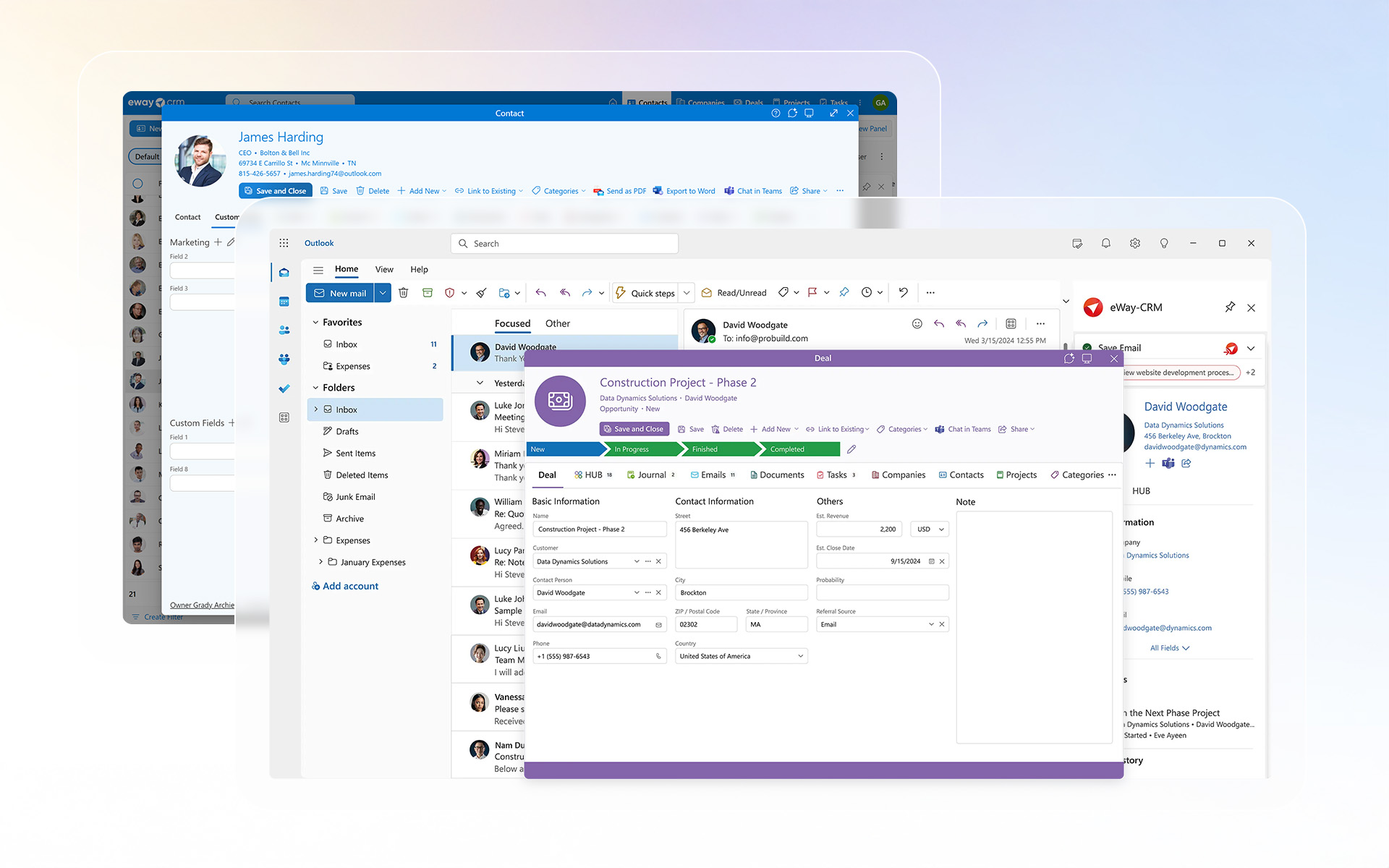
eWay-CRM users consistently mention this in reviews (like on Capterra): CRM right in Outlook means salespeople aren't filling out "extra" fields. The system becomes a natural part of their day, not a chore. Many describe how they figured Microsoft would be complicated, but the reality was the opposite—integration actually simplified their work and got them back to selling.
The psychology of change: Microsoft resistance is real
Let's be honest. Resistance to Microsoft products often isn't technical—it's gut-level.
"We're used to Gmail."
"Outlook is too complicated."
"Here we go with another system to learn."
For sales leadership, the key is not to dismiss this pushback but work with it head-on. What works best is showing quick, concrete value:
- One inbox = emails + CRM + tasks
- One calendar = meetings + follow-ups
- One view = complete customer relationship
Once people realize they don't have to think about where to find things—it's all right where they work—the resistance disappears faster than you'd think.
What about data from Streak or Copper?
Common concern: "We've got years of data in there."
Good news—data from Streak and Copper exports to Excel, and eWay-CRM handles direct imports. The eWay-CRM team regularly helps with migrations, both technically and process-wise. They've done this rodeo before.
No retyping, no data loss, no chaos. Actually, it's an opportunity to clean up your data and finally give it proper structure.
Why migration is the perfect time to switch
Growth always means some pain. Your shop went from 15 people to 50. You're shipping to customers in three states now, maybe more. Moving to Microsoft 365 is already bringing change. That's exactly why now is the best time to make a decision that:
- Won't slow down adoption
- Doesn't require duct tape and prayer to stay connected
- Is ready for your next phase of growth
Instead of trying to keep an old solution on life support in a new world, choose a CRM that was built for Microsoft 365 from day one.
Bottom line for sales leaders
If your company:
- Grew out of startup mode
- Is moving from Google Workspace
- Needs clear visibility on customers, pipeline, and data
- Doesn't want complicated workarounds that break at 5 PM on Friday
Then replacing your CRM is part of doing migration right, not an extra headache.
eWay-CRM isn't another tool to manage—it's a complete solution for Microsoft 365 that gives your sales operation structure, reliability, and room to scale as big as you want to grow.