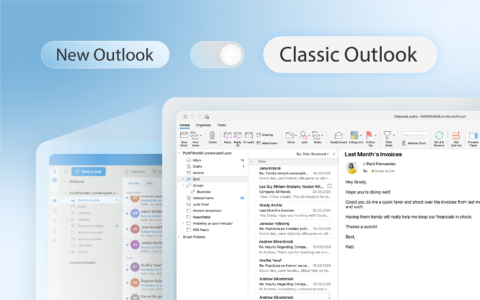



The new Outlook is built on a different architecture than the classic desktop version. Because it uses Microsoft cloud services and web tools more, its performance depends less on local Outlook files. It also depends less on your PC hardware. That said, several habits and settings can still help Outlook stay responsive and improve new Outlook performance each day.

Table of Contents:
Improve New Outlook Workspace
Manage Your Add-Ins
Stay Updated
Keep Your Inbox Manageable
Wrap-Up
FAQ
Improve New Outlook Workspace
Many people assume Outlook becomes slow because they store too many emails.
Unlike Classic Outlook, the new Outlook does not rely on local PST and OST files in the same way. However, synchronization issues, busy workspaces, connected mailboxes, and the way individual features behave can still affect its responsiveness.
Performance problems today are often caused by other factors, including:
- Too many open shared mailboxes
- Multiple active calendars
- Excessive notifications
- Background synchronization issues
- Add-ins competing for resources
A few simple adjustments can make Outlook feel significantly faster:
- Remove shared mailboxes you no longer use.
- Hide calendars you rarely access.
- Disable unnecessary notifications.
- Simplify folder structures where possible.
- Review integrations and connected apps regularly.
These changes won't solve every issue, but they are often the quickest way to improve new Outlook performance before moving on to more advanced troubleshooting steps.
Manage Your Add-Ins
Add-ins are one of the biggest productivity boosters in Outlook. They can help with CRM, project management, grammar checking, meeting scheduling, automation, and much more.
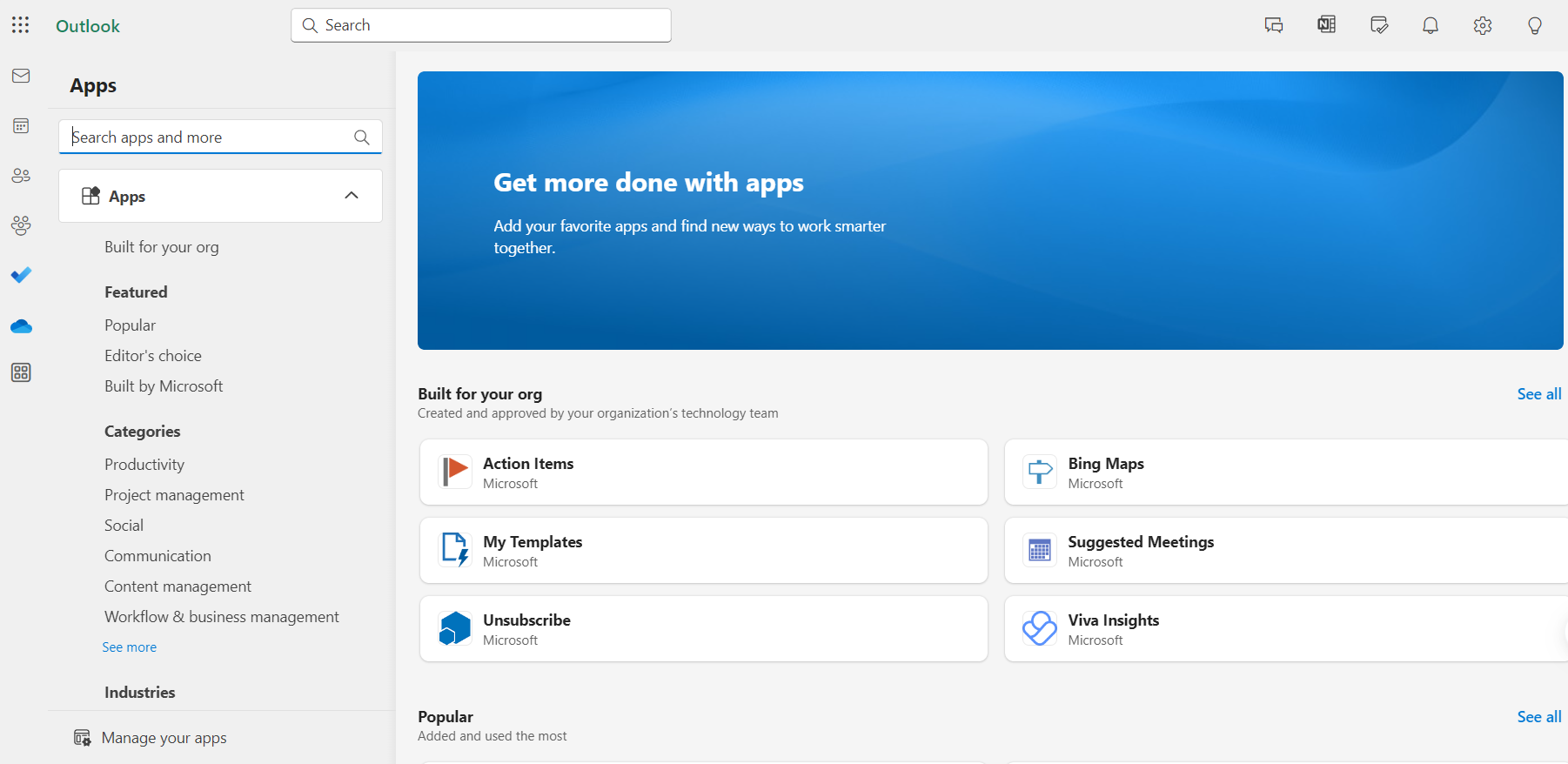
That said, not every add-in deserves a permanent place in your workspace. If Outlook behaves unexpectedly, first check whether you need all installed add-ins. Also check whether they’re up to date and compatible with the new Outlook.
Unlike Classic Outlook, the new Outlook does not support legacy COM add-ins. Instead, it uses modern web add-ins designed to work consistently across desktop, web, and mobile environments. While this approach improves stability and simplifies deployment, some older integrations may behave differently. They may offer fewer features, or the provider may no longer support them.
It's a good idea to review your add-ins regularly:
- Remove tools you no longer use.
- Keep important add-ins updated.
- Verify compatibility with the new Outlook.
- Prefer actively maintained web add-ins.
If Outlook issues started after you installed or updated an integration, try temporarily disabling that add-in. This can help you identify the cause.
For examples of useful modern tools, check out our guide to the best New Outlook add-ins.
Stay Updated
Microsoft continuously improves New Outlook through ongoing updates rather than large occasional releases. Features, fixes, and performance improvements arrive regularly.
That's why keeping Outlook updated is one of the simplest ways to improve reliability.
If you keep having issues, close Outlook and open it again. This helps apply the latest service changes and client updates. Eventually, you can check Microsoft's known issues and determine whether an add-in causes the problem.
You can also consult Microsoft's official support resources if the issue appears to be account-specific or technically complex. The Office Repair Tool can be your go-to solution to resolve mechanical hiccups in your software.
Keep Your Inbox Manageable
While the tips above focus on Outlook's setup, integrations, and settings, your inbox habits still matter. They can affect your daily experience.
A cluttered mailbox makes it harder to find information. It increases distractions, and often creates the impression that Outlook itself is slower than it really is.
A few simple habits can help:
- Archive emails you no longer actively work with.
- Create folders for recurring projects and clients.
- Use Categories to organize messages visually.
- Set up Rules to automate repetitive email sorting.
- Take advantage of Focused Inbox to prioritize important conversations.
Archiving is particularly useful because it moves inactive emails out of your primary workspace without deleting them. This won't magically solve technical issues, but it can make Outlook easier to navigate and help you focus on current work.
A well-organized inbox reduces the time spent searching for information and helps you respond faster.
Wrap-Up
Unlike Classic Outlook, the new Outlook relies more heavily on Microsoft’s services and web-based architecture, so its performance is less dependent on local data files and computer hardware. Keeping your workspace organized, reviewing add-ins, and checking for known issues can still improve new Outlook performance and make daily work more reliable. If Outlook remains slow or unresponsive, the answers below will help you identify the most likely cause.
FAQ Can add-ins slow down the new Outlook?
New Outlook uses web add-ins rather than the COM add-ins supported by Classic Outlook. Web add-ins run in a more restricted environment designed to improve stability, but an outdated, unsupported, or poorly maintained add-in can still cause unexpected behavior. Review your add-ins if problems begin after installing or updating one.
Do COM add-ins work in the new Outlook?
No. New Outlook does not support COM add-ins. It supports web add-ins, which use a different architecture and may not provide exactly the same features as their Classic Outlook equivalents. Before moving an important workflow, check whether its provider offers a compatible web add-in.
Will archiving emails make the new Outlook faster?
Archiving is mainly an organizational measure in New Outlook. It removes older messages from your primary working area, reduces visual clutter, and makes current conversations easier to find. Unlike in Classic Outlook, it should not be presented as a guaranteed performance fix based on reducing the size of a local PST or OST file.
Can a large mailbox slow down the new Outlook?
Mailbox size alone does not explain every performance issue. New Outlook uses a different architecture from Classic Outlook, so advice based on compacting PST files or limiting Cached Exchange Mode does not apply in the same way. If navigation, search, or synchronization is slow, first check for known issues, add-in compatibility, and problems with specific folders or mailboxes.
What should I do if the new Outlook freezes or stops responding?
Close New Outlook completely and reopen it. If the problem returns, check Microsoft’s current list of known issues and consider whether it began after adding an account, mailbox, or add-in. Microsoft also provides separate troubleshooting guidance for cases where New Outlook hangs, freezes, or stops responding.
How do I keep the new Outlook up to date?
Features and many fixes for New Outlook are delivered through Microsoft’s services, while its Windows integration component updates in the background. Closing and reopening the application helps apply pending client changes. Microsoft’s release notes and known-issues page can confirm whether a fix or feature is currently being rolled out.
Should I remove shared mailboxes to improve performance?
Do not remove a shared mailbox you need solely as a general speed fix. If you have mailboxes or shared folders that are no longer relevant to your work, removing them from your view can simplify the workspace. If one particular shared mailbox is slow or fails to synchronize, investigate that mailbox separately rather than assuming all shared mailboxes are the cause.
Can add-ins slow down the new Outlook?
New Outlook uses web add-ins rather than the COM add-ins supported by Classic Outlook. Web add-ins run in a more restricted environment designed to improve stability, but an outdated, unsupported, or poorly maintained add-in can still cause unexpected behavior. Review your add-ins if problems begin after installing or updating one.
Do COM add-ins work in the new Outlook?
No. New Outlook does not support COM add-ins. It supports web add-ins, which use a different architecture and may not provide exactly the same features as their Classic Outlook equivalents. Before moving an important workflow, check whether its provider offers a compatible web add-in.
Will archiving emails make the new Outlook faster?
Archiving is mainly an organizational measure in New Outlook. It removes older messages from your primary working area, reduces visual clutter, and makes current conversations easier to find. Unlike in Classic Outlook, it should not be presented as a guaranteed performance fix based on reducing the size of a local PST or OST file.
Can a large mailbox slow down the new Outlook?
Mailbox size alone does not explain every performance issue. New Outlook uses a different architecture from Classic Outlook, so advice based on compacting PST files or limiting Cached Exchange Mode does not apply in the same way. If navigation, search, or synchronization is slow, first check for known issues, add-in compatibility, and problems with specific folders or mailboxes.
What should I do if the new Outlook freezes or stops responding?
Close New Outlook completely and reopen it. If the problem returns, check Microsoft’s current list of known issues and consider whether it began after adding an account, mailbox, or add-in. Microsoft also provides separate troubleshooting guidance for cases where New Outlook hangs, freezes, or stops responding.
How do I keep the new Outlook up to date?
Features and many fixes for New Outlook are delivered through Microsoft’s services, while its Windows integration component updates in the background. Closing and reopening the application helps apply pending client changes. Microsoft’s release notes and known-issues page can confirm whether a fix or feature is currently being rolled out.
Should I remove shared mailboxes to improve performance?
Do not remove a shared mailbox you need solely as a general speed fix. If you have mailboxes or shared folders that are no longer relevant to your work, removing them from your view can simplify the workspace. If one particular shared mailbox is slow or fails to synchronize, investigate that mailbox separately rather than assuming all shared mailboxes are the cause.