
From Contact Lenses to Heat Pumps: How OKULA Nýrsko Implements eWay-CRM

In Czech Republic, OKULA Nýrsko—a company with deep roots in plastics processing—has undergone a major transformation. Once famous for producing the world's first soft contact lenses (based on the groundbreaking invention by Czech chemist Otto Wichterle in the 1960s), the firm has pivoted entirely.
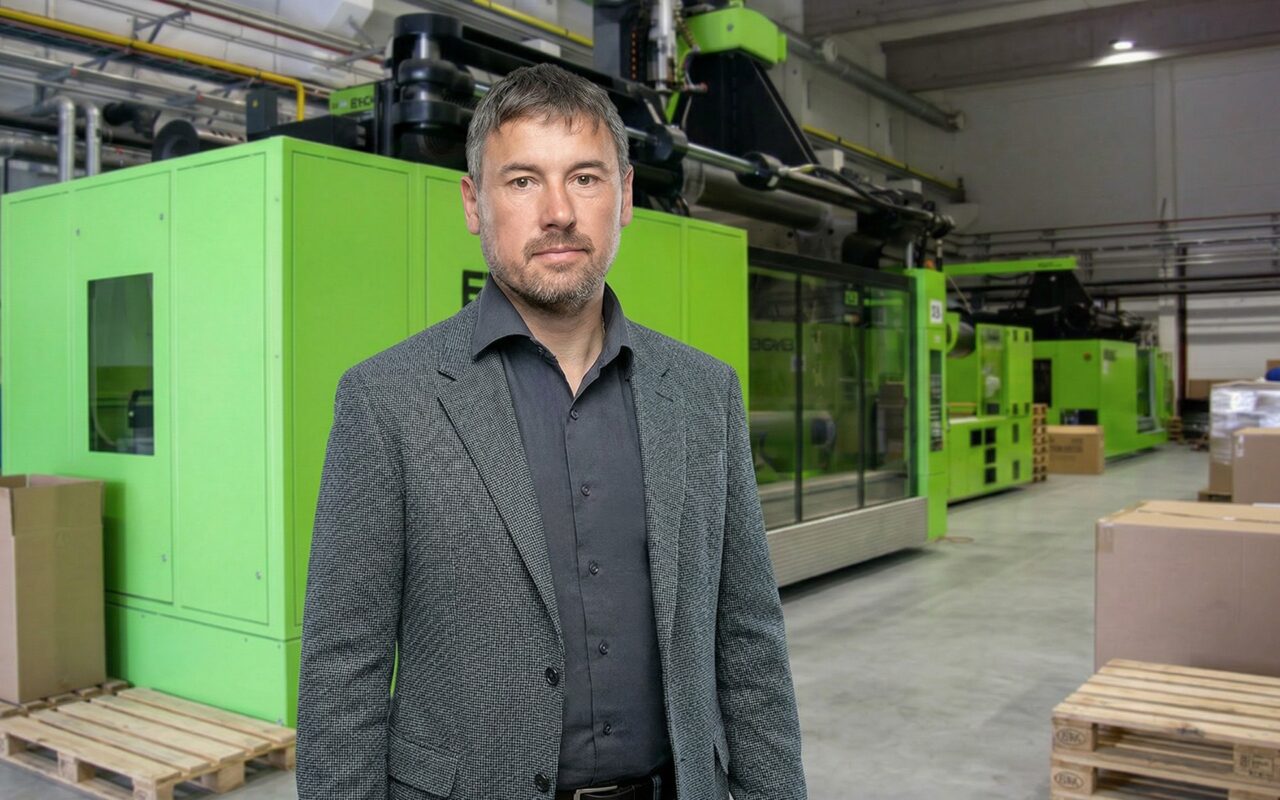
Today, it specializes in custom plastic components for the automotive industry, heat pumps and HVAC systems, and household appliances. It offers not just injection molding, but full value-added services like painting, printing, and assembly of complete sub-assemblies, says Pavel Faschingbauer, the Head of Sales.
When searching for a CRM solution, OKULA quickly realized that off-the-shelf tools built for e-commerce shops, insurers, or high-volume B2C sales didn't fit a manufacturing operation like theirs. Here's how they selected and rolled out eWay-CRM—and how they're tackling the intense competitive pressures facing European (and many U.S.) manufacturers.
OKULA Nýrsko went live with eWay-CRM earlier this year. Before diving into the selection process, could you give a quick overview of your company's current operations and key markets?
"We're still primarily a plastics processor and molder. Our big differentiator is our in-house painting, pad printing, and assembly capabilities—we don't just produce molded parts; we deliver finished assemblies ready for our customers' lines.
Our mix of business segments shifts over time. Right now, automotive accounts for about 25–27% of revenue. The dominant area is electronics/HVAC, especially components for heat pumps and air conditioning systems. Household appliances are another strong segment. Heat pump demand has been steady or even slightly growing over the last couple of years, though the German market cooled after subsidy programs ended. Our main long-term partner remains Daikin, but we also work with Bosch, Siemens, and as of 2023 we're ramping back up with Panasonic, which built a new heat pump factory in nearby Plzeň.
Your company gained worldwide fame decades ago for manufacturing those pioneering soft contact lenses invented by Otto Wichterle. That's ancient history now—the business has evolved dramatically, and like so many manufacturers, you've navigated some very choppy waters in recent years.
That's right. During the COVID years, we actually caught a break: besides our regular plastic parts, we produced protective face shields. Those shields were everywhere on TV, and we supplied national stockpiles too—that business basically kept us afloat. But afterward, low-cost Chinese competition flooded in, so we exited that segment and refocused on our core strengths.
Now we're facing different headwinds. Sky-high energy prices in Europe are hurting us directly (some appliance production like coffee makers and blenders has already shifted to Asia) and indirectly—our European customers are losing market share to Chinese brands, so they order less from us. Our clear strategy: deepen partnerships with existing customers while actively hunting for new ones in other segments to spread our risk.
Challenges like these are exactly why many U.S. manufacturers are also turning to better tools for tracking customer interactions, projects, and data. You felt the need for a stronger CRM. What made the decision process tricky?
The need for CRM had been simmering here for a while. The real trigger was rolling out Microsoft 365—it amplified the urgency to get our communication under control. Before, everything was scattered: individual computers, shared network drives... When someone left the company, their knowledge and history walked out the door too. We needed continuity and quick access to information—no more wasting time hunting for old emails or notes.
Plus, we're now proactively reaching out to far more prospective customers than in the past, so we needed structured data to manage that pipeline effectively.
"Before, everything was scattered: individual computers, shared network drives... When someone left the company, their knowledge and history walked out the door too. We needed continuity."
- Pavel Faschingbauer, the head of sales at OKULA Nýrsko
What ultimately tipped the scales toward eWay-CRM?
We evaluated options for about six months and narrowed it down to four vendors. Most CRMs we looked at were designed for B2C businesses—sales reps handling thousands of small customers, insurance agents, online retailers. That's not us. As a manufacturer, we have dozens of customers total, with a handful of key accounts driving 90%+ of revenue. We needed a system strong on handling complex customer organizational structures (multiple contacts, projects, ongoing programs) and tracking detailed project-related communication.
eWay-CRM won out thanks to its seamless integration with Outlook and Microsoft 365, its user-friendly interface, and solid references—including from another manufacturer in our region already using it.
Any pain points during the actual rollout and adoption?
Buying CRM software is the easy part—getting everyone to use it properly is the real challenge. The best results come when an external expert leads the implementation. Right now we're trying a more self-guided rollout, and we're hitting the usual hurdles: limited time, forcing ourselves to learn it, struggling to carve out bandwidth. I'd love it if, after six months or so, someone from eWay-CRM could come on-site, observe how we're actually using it in our daily reality, and say, 'Show me what you're doing... here's how you can take it further.' Remote Teams sessions or YouTube tutorials only go so far—it's half-baked without seeing our shop floor and office workflows firsthand.
You're spot on: the biggest risk is buying great software but never fully adopting it. We always do everything possible to avoid that here. So what are your main expectations from eWay-CRM to deliver real value?
I want a complete, searchable thread of every customer interaction—no matter who's on vacation or out sick. Too often we discover a customer suddenly 'remembers' something or conveniently forgets an agreement from two years ago, and we're digging through old emails to prove our point. With CRM, we aim to know more about each customer than they remember themselves—that's a real competitive edge.
I also expect strong reporting and dashboards: at-a-glance views of open quotes, revenue trends, service trip logs, and team activity reports with one click—no more manual spreadsheets or chasing people for updates.
You mentioned one specific issue around communication within the team...
We're currently fine-tuning user roles and permissions. We need to prevent people from seeing emails or notes that aren't relevant to them. For example, the board chair sends an email that shouldn't automatically be visible to me as sales director unless it's directed to me or my team.