


The factory floor is evolving. You see it in robotics, the IoT sensors, and the automated assembly lines. But walk into the front office of a typical mid-sized manufacturing firm, and you step back in time. Sales orders live in email threads. Production timelines are trapped in a master Excel sheet that only one person knows how to fix. Customer history is fragmented across three different legacy systems.

For years, this "organized chaos" was just a nuisance. For 2025, it is an existential threat.
While you are debating whether to upgrade your server, the industry is shifting toward Agentic AI—autonomous digital workers that don’t just answer questions but execute tasks. These agents can predict supply chain disruptions, re-quote deals based on real-time margin changes, and coordinate logistics without human intervention.
But there is a catch: These agents don't read mind-numbing email threads. They run on structured data. If your data is dirty, disconnected, or hidden in spreadsheets, your business is invisible to the future.
The New Language of Profit: From Text to TOON
Here is the technical reality that most software vendors won't tell you. The first wave of AI (ChatGPT) was about reading text. The next wave—the Agentic Orchestra—is about processing structured logic.
To orchestrate complex manufacturing workflows cheaply and quickly, modern AI systems are moving away from reading lengthy paragraphs. They are standardizing data formats like JSON and the ultra-efficient TOON (Token-Oriented Object Notation).
Why does this matter to a CEO or VP of Sales?
- Speed & Cost: An AI agent analyzing a TOON-structured database of your past 5,000 deals can tell you instantly which clients are most profitable. Doing the same analysis on unstructured Word documents or scattered emails costs 10x more in computing power and takes 10x longer.
- Precision: When your data lake is deep and clean, AI doesn't hallucinate. It knows exactly that "Part X-99" has a 3-week lead time and affects the margin of "Project Y."
The bottom line: The cleaner and more structured your data lake, the smarter, faster, and cheaper your AI workforce becomes.
The High Cost of "Good Enough"
Many manufacturing leaders hesitate to implement a unified CRM or Business Intelligence (BI) system because of two dangerous myths:
- "It’s too expensive and complex to implement."
- "We don’t have the time to train our guys on new software."
While you hesitate, the cost of inaction compounds. Research suggests that disconnected data and poor quality inputs cost organizations an average of $12.9 million annually in lost productivity and missed opportunities.
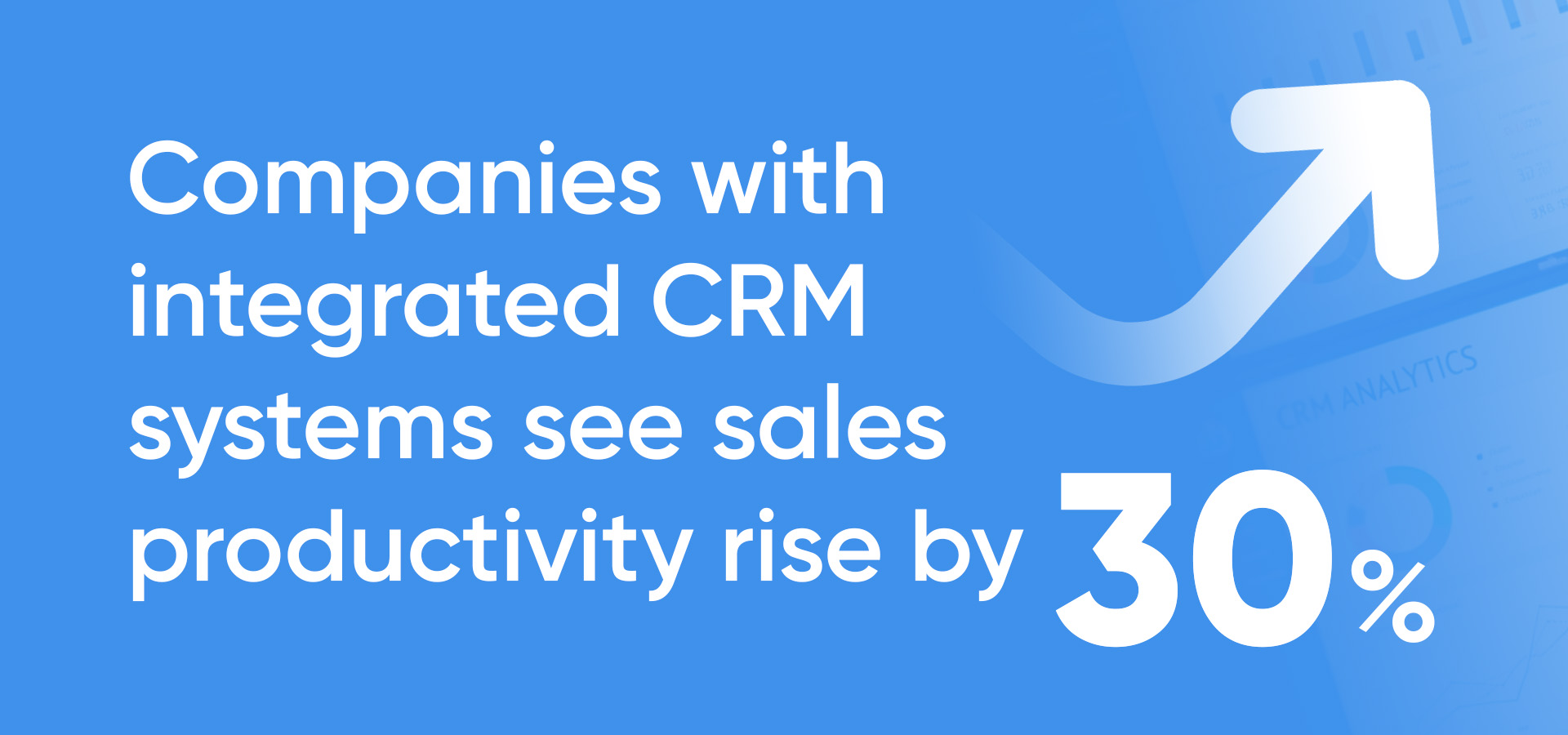
Conversely, the upside of integration is immediate. Companies that adopt integrated CRM systems see sales productivity rise by 30%. But the long-term play is even bigger: Businesses that pivot to an "AI-Native" data strategy—where all systems talk to one central source of truth—are seeing valuations skyrocket, with potential value multipliers up to 9.2x over three years compared to traditional peers.
A "Trojan Horse" for Digital Transformation
You don't need to rip out your entire IT infrastructure to get ready for the Agentic era. You just need to meet your team where they already live: Microsoft 365.
This is where eWay-CRM changes the equation. Instead of forcing your sales engineers and project managers to learn a new, alien interface, eWay-CRM sits directly inside Outlook. It turns the emails they are already sending into structured data points. It transforms a calendar invite into a tracked project milestone.
- For the Sales Rep: They can see the profitability of a deal before they send the quote because the CRM pulls cost data from your ERP.
- For Marketing: They stop guessing. They can see exactly which campaigns led to closed manufacturing contracts, aligning their KPIs with actual revenue.
- For the CEO: You stop driving in the fog. You have a real-time dashboard of your company’s health, allowing you to react to market signals today, not when the quarterly report comes out three weeks late.
Real World, Real Results
This isn't theoretical. Look at HAGER Group, a global manufacturer that struggled with long, complex sales cycles (2–3 years). By integrating their data into a single system that blurred the line between "Deals" and "Projects," they achieved a 50% improvement in management efficiency.
Or Poynting, an antenna manufacturer that needed to coordinate engineering and sales across the US, Europe, and Africa. Using an Outlook-integrated tool, they eliminated the "data lag" that kills global deals. Everyone, everywhere, saw the same truth at the same time.
Yesterday Was Too Late (But Today is Fine)
If you feel like the train has left the station, don't panic. Most of your competitors are still stuck in "Pilot Purgatory," playing with chatbots that don't do real work.
You can leapfrog them by focusing on the foundation: Data Integrity.
- Audit your silos: Where does your customer data live? (Hint: If it's in Excel, it's dying).
- Integrate, don't migrate: Choose tools like eWay-CRM that integrate with your existing Microsoft ecosystem to minimize friction.
- Build your Lake: Start capturing structured data on deals, projects, and costs now. Even if you don't use AI agents today, you are building the fuel they will need tomorrow.
The era of the "gut feeling" manager is ending. The era of the data-augmented leader is here. Don't let a spreadsheet be the reason your factory gets left behind.
- Audit your current data flow. Identify where sales, projects, and financial data live today.
- Choose a CRM that integrates with your existing ecosystem.
- Start small: migrate contacts, deals, and email history first.
- Connect BI dashboards to see real-time profitability.
- Build your internal data lake step by step — AI will multiply its value.